Unexpected Expenses
Understand your property repair responsibilities before they become surprises.
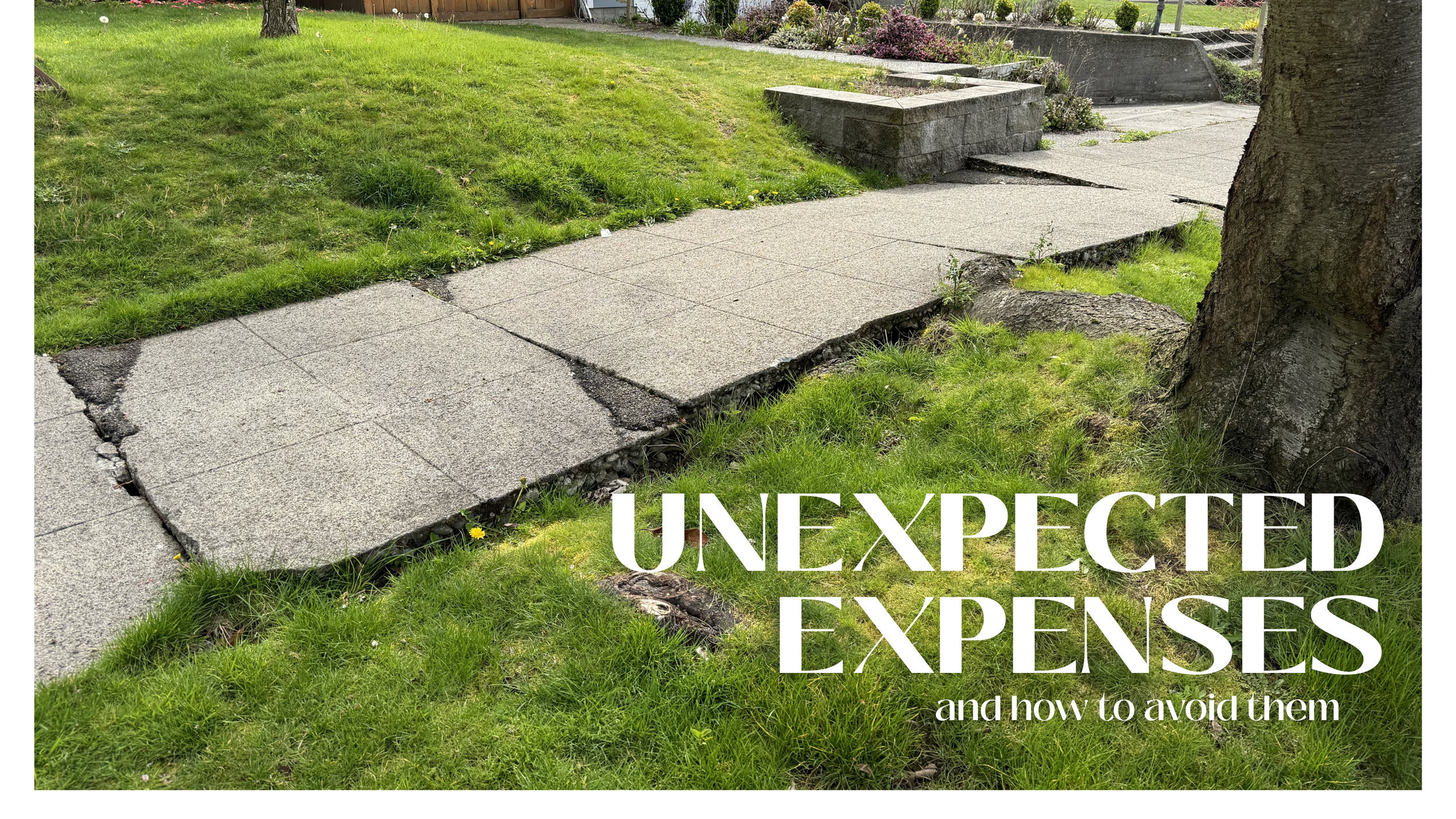
When tree roots buckle the sidewalk in front of your house, the repairs are the responsibility of the homeowner, even if the city planted the trees.
Homeownership is usually a step up from renting in more ways than one, including the expenses. Your mortgage and insurance will likely run more than your old rent check, and regular maintenance is now on you, not your landlord. On top of that, there are the projects you need to do -maybe that roof isn't going to last another winter - and the ones you want to do, like a fun bathroom upgrade.
But the worst kind of expenses are the surprise ones. Not just the costs you didn't budget for, but the ones you didn't even realize were your responsibility. In Seattle, there are more than a few "hidden" expenses worth knowing about, things that are on or under your property, or right next to it, that the city requires you to maintain and pay for. These aren't unreasonable, and some may never come up during your ownership. But they can be costly when they do.
Each of these topics could be its own long-form post, and I may write those in the future. For now, I’ve provided a short summary of each for awareness, and a reminder that all of them are part of the due diligence checklist I walk through with every buyer before making an offer. None of this is meant to scare anyone away from buying in Seattle. It's one of the best cities in the country to own a home. Going in with eyes open just means you can budget for these things, negotiate around them, and not be blindsided if they come up.
Utility service lines, beyond your property
When something goes wrong with a water or sewer line, most people assume the city handles it past your property line. In Seattle, that's not how it works. Homeowners are responsible for their sewer line all the way to the utility main, which is often located beneath a sidewalk or street. If your side sewer cracks under the road, you're paying for the pipe repair and for restoring whatever surface is above it. For water and electrical, you're responsible for everything on your side of the meter.
Costs range from $10,000 to $20,000 for a typical side sewer repair, and up to $40,000 depending on depth, location, and whether the pipe can be relined or needs full replacement. Water main replacements run $3,000 to $15,000. Because roughly half of Seattle's housing stock was built before 1961, old clay and concrete sewer lines are common and especially vulnerable to root intrusion and soil movement. Homes with original sewer lines likely have original galvanized water mains too, which cause low water pressure as pipes slowly narrow from buildup over time.
Before you make an offer, I help my buyers understand the condition of these systems. If repairs are needed now or on the horizon, we can factor that into the offer.
Trees on your property, including the ones on your parking strip
The planting strip between your sidewalk and the street might not feel like yours, but in Seattle, maintaining it is your responsibility, including any trees growing in it. Seattle has roughly 170,000 documented street trees and the city actively manages only about 38,000 of them. SDOT takes ownership only of trees it has documentation of planting, and those records are often incomplete. The practical rule: if there's a tree in front of your house, assume it's yours unless you can confirm otherwise.
Maintaining a street tree means keeping branches at least 8 feet above the sidewalk and 14 feet above the roadway. It also means pulling a street use permit from SDOT before any pruning, which most homeowners don't know. You can't just grab the clippers and go. The permit process is actually your friend here: hire a licensed arborist, pull the permit, and SDOT reviews the work in advance, which protects you if something goes wrong with the tree afterward.
Before offering on a property, check the Seattle Tree Inventory Map to see what's recorded about any street trees nearby, and go in knowing the documentation isn't always complete, and you may end up on the hook for tree maintenance either way.
The sidewalk
The sidewalk in front of your house is your responsibility to maintain, repair, and keep clear of hazards, including snow and ice and buckling panels caused by tree roots. If a damaged panel causes someone to trip, the liability lands on you. And when a street tree buckles the sidewalk in front of your house, the repair is yours even if the city planted the tree. That means hiring a licensed arborist to prune the roots, removing the damaged concrete, and repaving.
Before offering on a home, walk the sidewalk in front of any property you're seriously considering. Uneven panels, cracked concrete, or visible root lifting near the parking strip are all signals that a repair may be coming due. Seattle's sidewalk repair program is a useful resource for understanding your obligations.
Underground oil tanks
This one is less of an ongoing expense and more of a potential landmine. Many Seattle homes built before the 1970s were heated with oil, and a lot of those properties still have old tanks buried in the yard, sometimes abandoned and forgotten across multiple transactions.
Cleanup costs for a leak can easily exceed $10,000 and may not be covered by homeowner's insurance. The state's PLIA program, which used to help cover cleanup and removal costs, ended last year and now provides grants and loans, depending on income. It is most likey any removal and remediation expenses will be yours to fully bear. Under current environmental law, there's no statute of limitations on liability for contamination from a leaking tank. Existence of a tank should be disclosed on the seller's Form 17, but "I don't know" is a common answer. If a home was built before 1970 and there's no record of a tank decommission (record keeping started in 2004), I recommend a tank scan. They run a few hundred dollars, and the peace of mind is worth it. The Washington Department of Ecology has guidance on next steps if a tank is found.
Retaining walls and rockeries
Seattle's hilly topography means that many lots come with a maintenance obligation buyers don't always see coming. If a property includes a retaining wall or rockery, its condition matters, and repair or replacement can be costly. If the property sits within a steep slope or landslide Environmentally Critical Area, any future construction or renovation, including adding an ADU, may require a geotechnical engineer and a separate ECA permitting process before work can begin. It's worth checking Seattle's ECA maps before closing and getting eyes on any existing walls during your inspection.
Unpermited work inherited from a prior owner
Most projects in Seattle require a permit, but unpermitted additions, decks, and ADUs are more common than you'd think. When you buy a home, you inherit responsibility for any work that isn't up to code. If the city flags it during a future remodel, bringing it into compliance is on you. This is worth investigating before you close. The Seattle Department of Construction and Inspections allows permit searches by address, and I'm happy to walk you through the implications of anything that turns up.
Due Diligence
Due diligence is one of the most important parts of the home buying process, regardless of location or age of construction. And, buyers have an obligation to perform due diligence on a property before they purchase it. Even if something wasn’t disclosed, if the information was publicly available, buyers have a responsibility to learn about it before purchasing a property and will not have luck going after the seller for damages related to the issue after a sale. Having an experienced agent guide you through a home purchase can help you avoid costly surprises and make choices that fit your lifestyle and your budget. Contact me to learn more about how I help my buyers and sellers have a happy and smooth experience.

If you've made it this far, you probably care about doing this right. That's exactly the kind of buyer or seller I love working with.
I brought 20 years of business experience to real estate for one reason — I believed people deserved better guidance on one of the biggest financial decisions of their lives. The last four years have been about delivering on that, one client and one transaction at a time. My approach is built around education and empowerment, so you always know where you stand and what comes next, whether you're buying your first home or selling one you've loved for years.
If you're ready to approach your next move with this kind of clarity and intention, and you want someone who treats your transaction with genuine care and rigor, I'd love to be part of that process. You deserve to feel confident and informed at every step, not just at the end. Reach out and let's start the conversation.