The Right to Own - And Why It Still Matters
My Clients Do Something Every Day That Women Couldn't Do Alone Until 1974
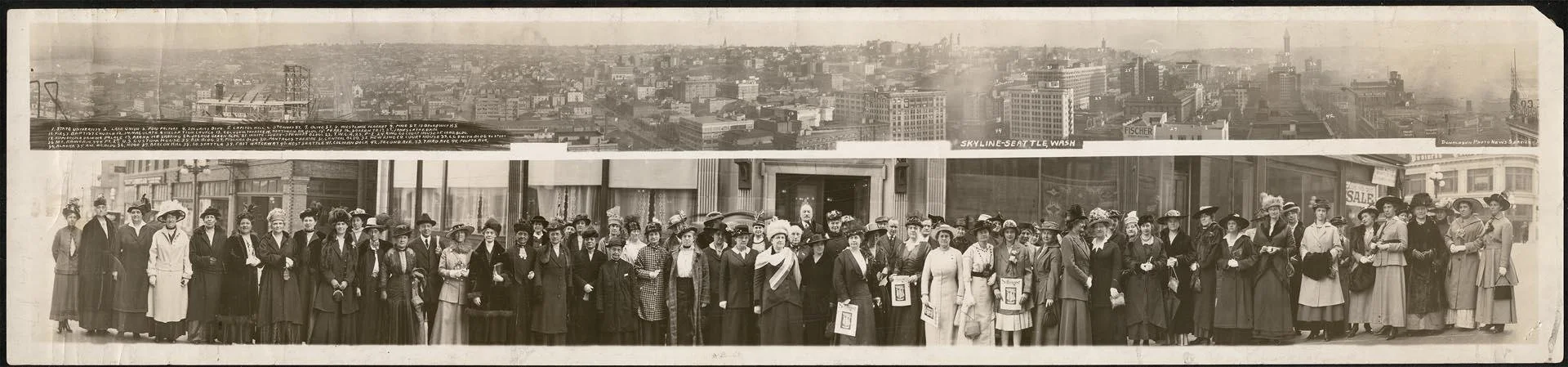
The print pictured here features two panoramic images, one of the Seattle skyline, and the other of a large group of people posing together on a city sidewalk. Most of the individuals are women, and several are proudly displaying copies of The Suffragist, a weekly newspaper published by the Congressional Union for Woman Suffrage.
Handwritten on top image: Skyline - Seattle, Wash. Donaldson Photo News Service - Sea
Handwritten on verso: Women suffragists, with panorama of city circa 1915
Credit: MOHAI, SHS5211 - No Known Copyright
Women’s Month Musings
It's the first week of International Women's Month, and I'm sharing some history and thoughts around women and homeownership. Partly because it's my job, partly because we are living in a time when civil rights seem to be moving in the wrong direction, and partly because I ended up down an internet rabbit hole when I couldn't sleep earlier this week.
Some context - my husband and I had already bought or sold five homes together before I became a real estate agent. Homeownership is part of my identity and has helped us build financial stability. Along the way, I've enjoyed personalizing the spaces in our homes. It's a lot of work, but very gratifying to see all the big and little decisions turn a house into a space that reflects yourself. My privilege meant that I hardly considered how many many other women both now, and before me, didn't have the same rights to homeownership. While women could technically own property since around the turn of the century (1900, that is), it wasn't until 1974 that a woman could get a mortgage without a man co-signing for her. That's not ancient history - 1974 is less than a decade before I was born.
So how did we get here?
In early American history, there was a legal concept called coverture - when a woman got married, she stopped existing as a legal person. Her property became her husband's, she couldn't sign a contract, borrow money or hold a deed. Mississippi (of all places) was the first state to give married women the right to own property separate from their husbands, in 1845. The rest of the country started to catch on, and by 1900 all states had recognized women's property rights in some form. But owning property and being able to finance it were still two different things. Even after women could legally own or inherit a home, banks could still refuse to lend to a woman, and that didn't change until the Equal Credit Opportunity Act was passed in 1974. And here’s a funny anecdote - not funny haha, but like roll your eyes funny - when the National Association of Realtors was founded in 1908, every one of its 120 members was male, despite the fact that there were already 3,000 women brokers working around the country at the time. Thousands of women were out there selling homes they legally could not buy themselves. Go ahead and read that again, I'll wait.
Catching up
Single women are one of the fastest-growing groups of homebuyers in the country right now. My favorite stat to share is that single women have outpaced single men in home purchases every year for decades. In 1981, single women made up just 11% of homebuyers, and today it's nearly 20%. Over 20 million single women own homes in the U.S. right now - and their homeownership rate (51.9%) actually edges out single men (49.6%). https://www.msn.com/en-us/money/realestate/the-worst-housing-market-in-years-couldn-t-stop-single-women-from-owning-a-record-breaking-number-of-homes/ar-AA1XSVtX?uxmode=ruby&ocid=edgntpruby&pc=EDBBAN&cvid=69b1e3d553b541d79e378ac33408d90b&ei=16
That's a massive shift in the last 50 years. And it's important because homeownership isn't just about having a nice place to live. For many people, and especially for women, it's the biggest wealth-building tool there is. The numbers here are pretty hard to ignore. The median net worth of a homeowner is roughly 40 times that of a renter. For single women specifically, those who own homes had a median net worth of $266,500 in 2022, compared to $74,500 for single women overall, and a home accounts for about 66% of a single woman's total assets on average. That's not just a nice place to live, that's a financial foundation that renting doesn’t replicate unless you’re disciplined or savvy enough to be investing on the side. Every mortgage payment builds equity - essentially a forced savings account that may also benefit from home price appreciation, depending how long you live in the home and what happens in the economy during that time. Home owners benefit from fixed housing costs, the mortgage interest tax deduction, and unlike a 401k or a stock portfolio, it's somewhere you get to paint the walls as many times as you want.
Not far enough
Many of my favorite client conversations have been with women buying on their own - first-timers, women starting a new chapter, and I would love to help more of them. But I also know the numbers aren't equal for everyone, and it's important to talk about that too. Because while the headline stats are encouraging, they hide gaps, particularly for women of color, who continue to face systemic barriers to homeownership and wealth. The gaps are real and they're not small. Black and Latina women have the lowest homeownership rates of any group in the country. Black homebuyers are denied mortgages at nearly twice the rate of white applicants - 26% versus 16% - and even when they do get approved, they tend to pay more, earn less appreciation on their investment, and carry higher property taxes. The racial wealth and homeownership gap are basically the same gap, just described two different ways. And that's before you factor in that Black women earn a median of $50,470 a year compared to $69,480 for white men. The implications are staggering and the whole system needs to evolve to make homeownership and financial stability accessible to all, not just the people who already had a head start. I don't know what to do about this just yet, but I plan to get involved in influencing systemic change as I grow in my career.
Up next
For the rest of International Women's month, over the next three weeks, I'll share more about each of these topics - how homeownership meaningfully impacts a women's financial livelihood, who's still being left out and why, and the story of women in the real estate profession itself. I hope you'll stick around to learn more and join me in the conversations.
-Peri
Sources: National Association of Realtors; Equal Credit Opportunity Act (1974); U.S. Census Bureau; CREW Network.
Key Day
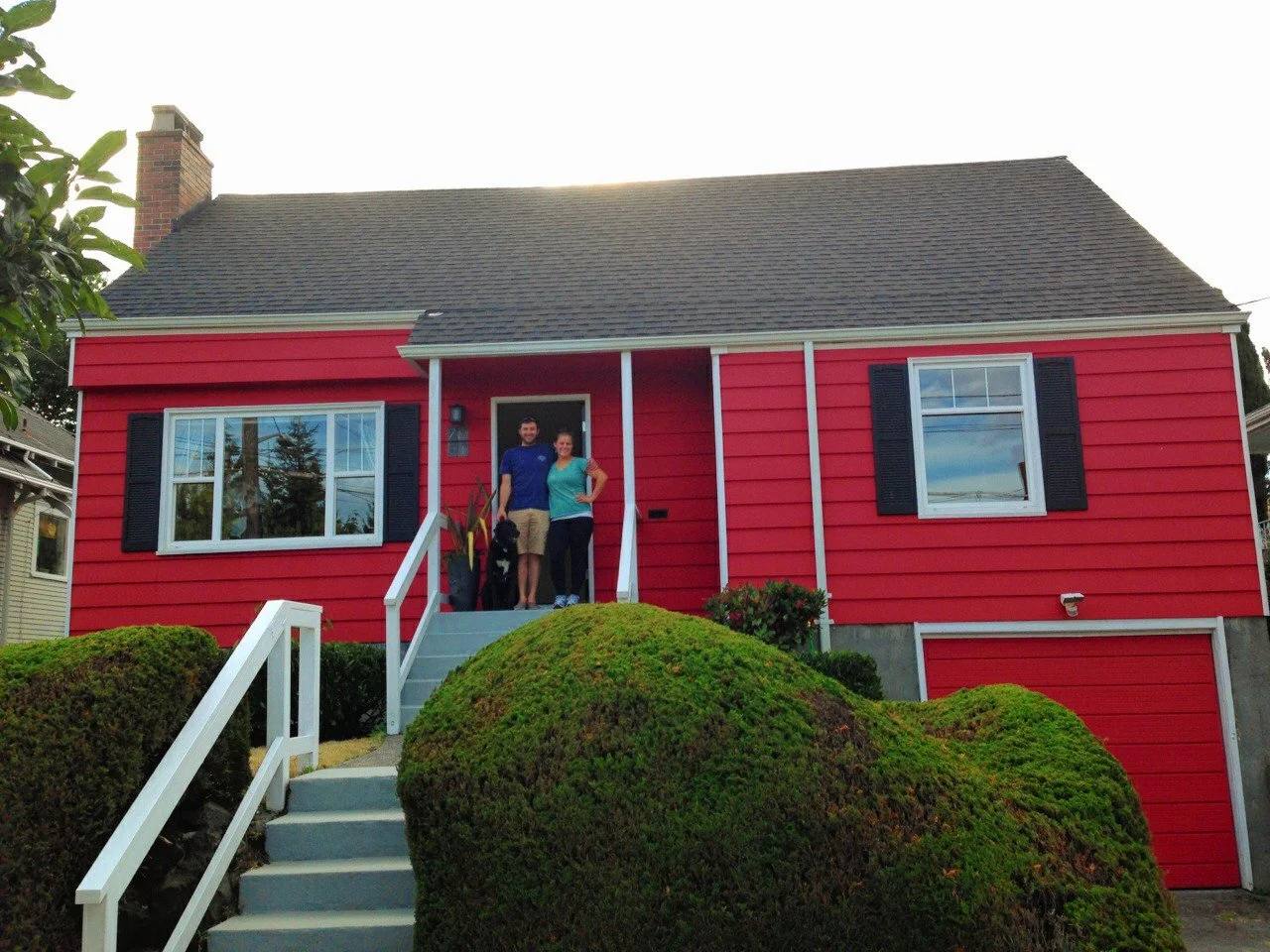
Closing day on our home in Ballard in 2013.