A Home of Her Own
Home Economics: What Homeownership Means for Women's Financial Lives
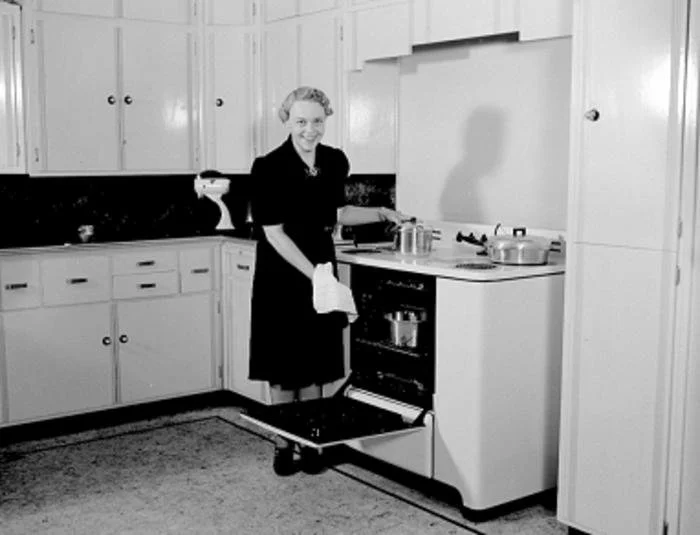
Home “Economics” (Woman in Kitchen at Oven), Courtesy of the Seattle Municipal Archives, item number 18546
Week 2 of 4 - Women in Real Estate
Last week I shared some of the history behind women's right to own property, and how recent that history really is. https://www.pnwperihomes.com/blog/womensmonth1
This week I want to get into the why behind all those single women choosing to buy. Because for most women purchasing a home on their own, this isn't just about having a safe, comfortable place to live. It's the biggest financial decision of their lives, with real implications for their long-term security, and I think that deserves more attention.
The math is pretty compelling
Something we say a lot in real estate, is that a mortgage is basically a forced savings account. Unless you're on an interest-only payment plan, a portion of every payment goes toward building equity in your home. A rent payment, on the other hand, builds equity for someone else. There's a version of the argument that renting makes sense financially if your rent is meaningfully lower than a mortgage payment, and you're disciplined enough to invest the difference. But the reality is that most renters aren’t do that, and since homes tend to grow in value over time, as a homeowner slowly pays down their debt, the asset itself is appreciating. That combination of “savings” is hard to replicate any other way.
The numbers back this up. The median net worth of a homeowner is roughly 40 times that of a renter. For single women specifically, those who owned homes in 2022 had a median net worth of $266,500, compared to $74,500 for single women overall. And a home accounts for about 66 cents of every dollar of wealth the average single woman owns. That's not just a diversified portfolio, that a solid retirement foundation (house pun intended.)
Homes build stability in a way that's hard to put a price tag on
According to research by the National Association of Realtors (NAR) one of the biggest motivating factors for single women homebuyers is stabilizing their housing costs. When you're managing a household on one income, the predictability that comes from a fixed monthly mortgage payment, rather than being at the mercy of a landlord who can raise your rent, matters a lot.
Many single women also see homeownership as a cornerstone of their retirement planning. If you own your home outright by the time you retire, you've removed your biggest monthly expense. The monthly difference in lifestyle for someone who is still paying rent at 70 on a fixed income is significant.
Women are buying homes, despite hurdles
The median income for single female homebuyers in 2024 was $72,500 - the lowest of any household type buying homes. And NPR just reported that the pay gap has widened the last three years in a row.
https://www.npr.org/2026/03/26/nx-s1-5758090/equal-pay-day-gender-wage-gap
Despite these disadvantages, women are making homeownership happen on less money than anyone else in the market. NAR's Deputy Chief Economist Jessica Lautz put it plainly: single women clearly value the stability homeownership provides and are willing to make financial sacrifices to get there, even on lower incomes than their male counterparts.
Women prioritize their financial futures, often at real personal cost, because the right to homeownership isn't just about financial security, it’s the physical manifestation of a woman's right to take up space in this world.
What this means for my work
Helping a single woman buy a home is one of my favorite parts of this job, because I understand what's behind it, the sacrifices, the planning, the decision to bet on yourself.
But here’s another part that matters as much as anything I've shared today. The feel-good headlines about women buying homes is not the universal experience it should be. For women of color, the doors are harder to open, the terms are less fair, and the outcomes are measurably worse. These are barriers that have nothing to do with determination or financial discipline, and next week I'm going to share more about the ugly realities of their experience and how this industry isn’t doing enough to change that.
I hope you'll join me then for this important topic.
-Peri
Further reading: https://blog.firstam.com/economics/more-single-women-than-ever-own-homes-even-as-affordability-pressures-persist
Sources: National Association of Realtors 2024 Profile of Home Buyers and Sellers; U.S. Census Bureau; Federal Reserve Survey of Consumer Finances.
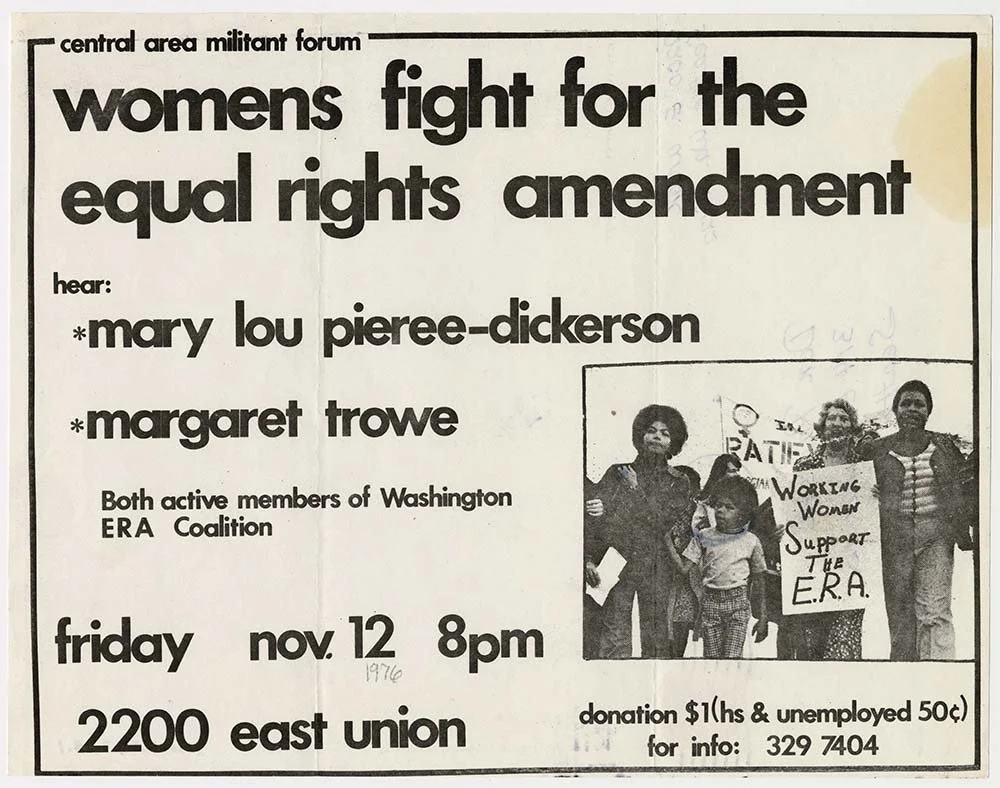
Flier from Women’s fight for equality in Seattle, 1976
This flier advertises a 1976 forum in support of the ERA, sponsored by the Central Area Militant Forum and featuring speakers Margaret Trowe and Mary Lou Pierce-Dickerson ("Pierce" is misspelled as "Pieree" on the flier). Pierce-Dickerson and Trowe have both been longtime activists for women’s rights and other causes; Trowe ran in several elections for the Socialist Workers Party, while Pierce-Dickerson served nine terms in Washington’s House of Representatives. Credit MOHAI, Don Paulson Collection of Political and Social Ephemera, 2002.23.3.68.1

Let’s work together
If you've made it this far, you probably care about doing this right. That's exactly the kind of buyer or seller I love working with.
I brought 20 years of business experience to real estate for one reason — I believed people deserved better guidance on one of the biggest financial decisions of their lives. The last four years have been about delivering on that, one client and one transaction at a time. My approach is built around education and empowerment, so you always know where you stand and what comes next, whether you're buying your first home or selling one you've loved for years.
If you're ready to approach your next move with this kind of clarity and intention, and you want someone who treats your transaction with genuine care and rigor, I'd love to be part of that process. You deserve to feel confident and informed at every step, not just at the end. Reach out and let's start the conversation.