The Homeownership Gap
The Door to Homeownership Isn't Open to Everyone. Here's Why.
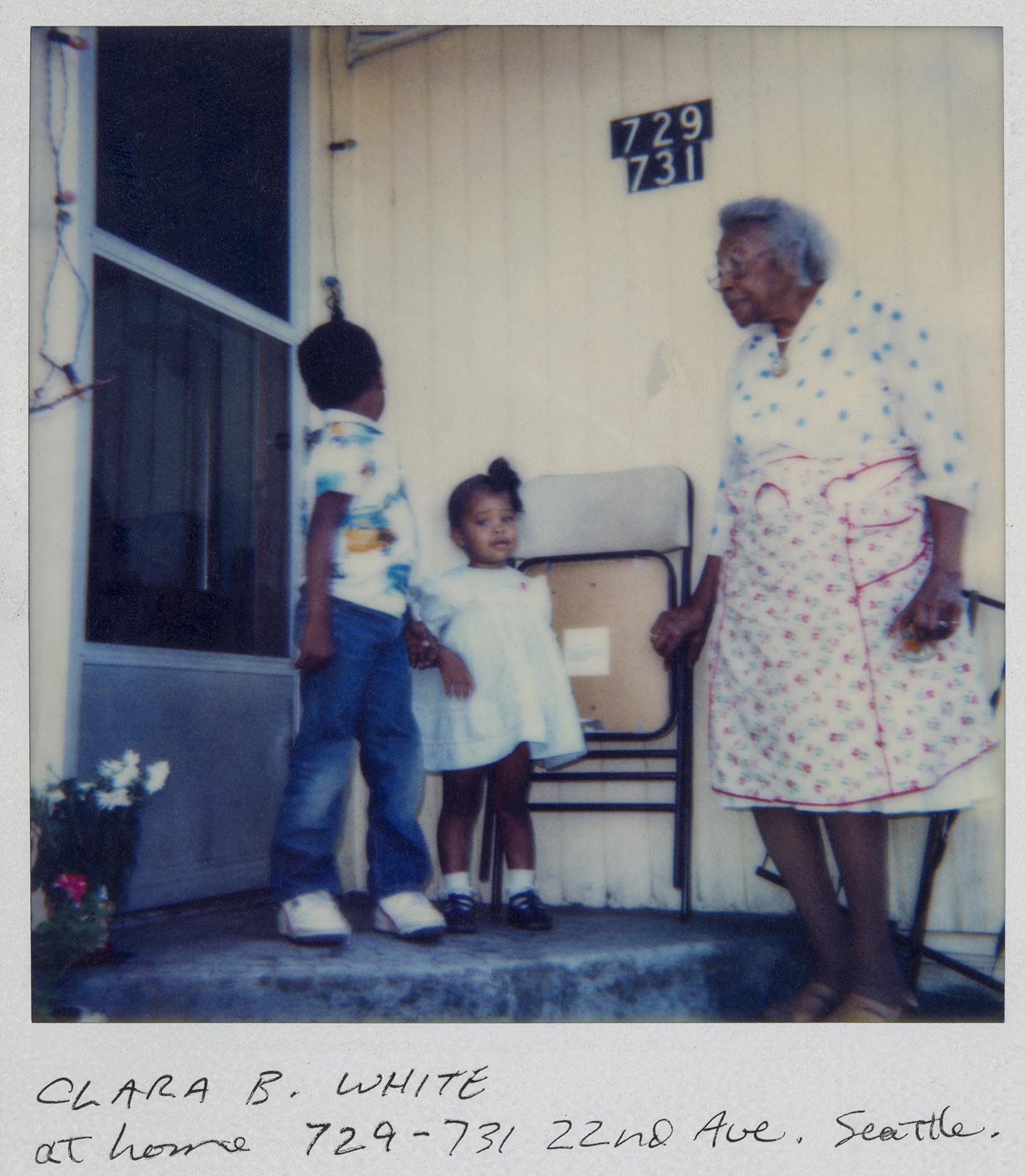
Clara B. White
Clara B. White owned and lived in the duplex at 729-731 22nd Avenue in the Central District of Seattle. She was a seamstress and was one of the first African-American women to own property in Seattle. The education wing at the First African Metodist Episcopal Church is named after her, as she was a Sunday School teacher there for 60 years. This photo shows Clara White with two children on the porch of her home.
Date: Circa 1975
Credit: MOHAI, 2000.30.2
Week 3 of 4 - Women in Real Estate Series
The headline numbers about women and homeownership are encouraging. The reality underneath them is harder to sit with.
Last week I wrote about how homeownership can transform a woman's financial life. The wealth-building case is compelling and the data is real. But access to homeownership isn't available to everyone equally, and sitting with that tension is one of the harder parts of doing this job. I love what I do. I also know that the system I work inside has not served everyone fairly, and that it still doesn't. I wouldn’t write a series like this without saying that part out loud.
The gap is wider than you think
Nationally, the homeownership rate for Black households is 44.7%, compared to 74.2% for white households. For Hispanic households it's 51.1%. Those gaps exist in every market. Black homebuyers are denied mortgages at nearly twice the rate of white applicants - 26% versus 16% - and even when approved, they tend to pay more, earn less appreciation on their investment, and carry higher property taxes. A Yale University study found that Black homebuyers pay an average of 29 basis points more than comparable white buyers. The racial wealth gap and the homeownership gap are essentially the same gap, described two different ways. Washington state reflects this national picture, and then some. Here, about 69% of white households own their homes. For Black households, that number is 34% - well below even the national average.
When the Equal Credit Opportunity Act passed in 1974, it protected women from lending discrimination, but lending protections based on race didn't come until two years later. And laws on paper don't automatically undo the discrimination people face every day. In fact, Black and Latino homeownership gaps today are as wide as they were before the Fair Housing Act passed in 1968. The laws may have changed but the outcomes did not.
Washington state has an ugly history of “Redlining”
Researchers from the University of Washington found more than 40,000 examples of racist neighborhood covenants in Washington state that explicitly excluded people of color from purchasing homes in specific neighborhoods. These weren't informal social pressures, they were legal documents, recorded by county auditors and enforced by state courts. Washington residents of color faced discriminatory barriers to housing from the 19th century onward, including land seizures, forced removal, exclusionary zoning, and racist practices embedded in state-licensed real estate, lending, and appraisal industries. Those covenants haven't been legally enforceable since 1969, but you don't undo a century of state-sanctioned exclusion in 50 years, especially when homeownership is the primary vehicle for intergenerational wealth. The families who were shut out of buying in certain neighborhoods in 1955 didn't just miss out on a house, they missed out on decades of appreciation, equity, and the ability to pass something on.
What's being done about it
In 2023, Washington state passed the Covenant Homeownership Act, making Washington one of the first states to directly acknowledge the role of its own government institutions in housing discrimination and create a program to remedy it. The program provides 0% interest down payment and closing cost assistance to first-time buyers whose family lived in Washington before 1968 and were affected by racially discriminatory housing covenants. In its first year, it helped 547 homebuyers across 24 counties. In April 2025, Governor Ferguson signed an expansion raising income eligibility and introducing loan forgiveness after five years for lower-income participants.
Locally, HomeSight has been working since 1990 to preserve and promote economically and culturally diverse communities in Seattle through affordable homeownership - 35 years of on-the-ground work. As a nonprofit Community Development Financial Institution, they offer BIPOC-specific down payment assistance at 0% interest, deferred for 30 years, along with homebuyer education and financial counseling for buyers who wouldn't otherwise qualify through traditional lenders.
One of their programs hits especially close to home for me as a Windermere agent. The Sam Smith Hi Neighbor Homeownership Fund - a partnership between HomeSight, Windermere Real Estate, U.S. Bank, and the National Association of Real Estate Brokers - was created to honor Sam Smith, a Washington state legislator who spent four attempts over several years before finally passing the state's Open Housing Law in 1967, ensuring that all people regardless of race or religion could live wherever they chose. The fund provides up to $12,000 in down payment assistance for Black homebuyers in Washington earning between 80% and 120% of area median income. It's a loan product designed to bridge the affordability gap that the data makes so clear.
I donate to HomeSight at every closing. It's a small thing in the context of a large problem, but it's one concrete way I can put my business directly in service of the mission I keep talking about.
What still needs to change
Programs help individuals, but the structural issues run deeper. Credit scoring models still disadvantage buyers without traditional credit histories. Appraisal discrimination continues to suppress home values in communities of color, and the political will to sustain these programs is not guaranteed. As Rep. Jamila Taylor said when the Covenant expansion passed: it's not the only solution to the systemic inequities caused by centuries of discrimination, but it is meaningful progress.
There's also something happening right now in the real estate industry that doesn't get talked about enough in the context of fair housing. Compass has been aggressively pushing private listing networks - a system where homes are marketed within a brokerage's internal network before, or instead of, being listed on the MLS where any buyer's agent can find them. They've framed this as a seller's choice issue, but researchers and U.S. Senators including Senator Elizabeth Warren and Ron Wyden, have raised concerns that private listing practices perpetuate housing discrimination prohibited under the Fair Housing Act, and make potential discrimination harder to detect. A Zillow analysis found that homes in majority-white neighborhoods were more than twice as likely to be listed privately compared to homes in majority-non-white areas. Compass has even filed a lawsuit specifically against our local NWMLS over its listing transparency rules. When access to inventory is controlled by the largest brokerage in the country, the people most likely to be shut out are the same people who have always been shut out.
Meaningful progress is worth celebrating also worth protecting. Windermere has taken a vocal stance against private listing networks, in the name of fair housing. It’s an imperfect industry but i’m hoping I can make more change on the inside than the outside, and I’m proud to hang my license with this brokerage.
Next week I'm closing the series with a look at women in the real estate profession itself, including some numbers that genuinely surprised me. More soon.
-Peri
Sources: Washington State Housing Finance Commission; U.S. Census Bureau; NAR; HomeSight; Washington House Democrats; HousingWire; U.S. Senate; Yale University.
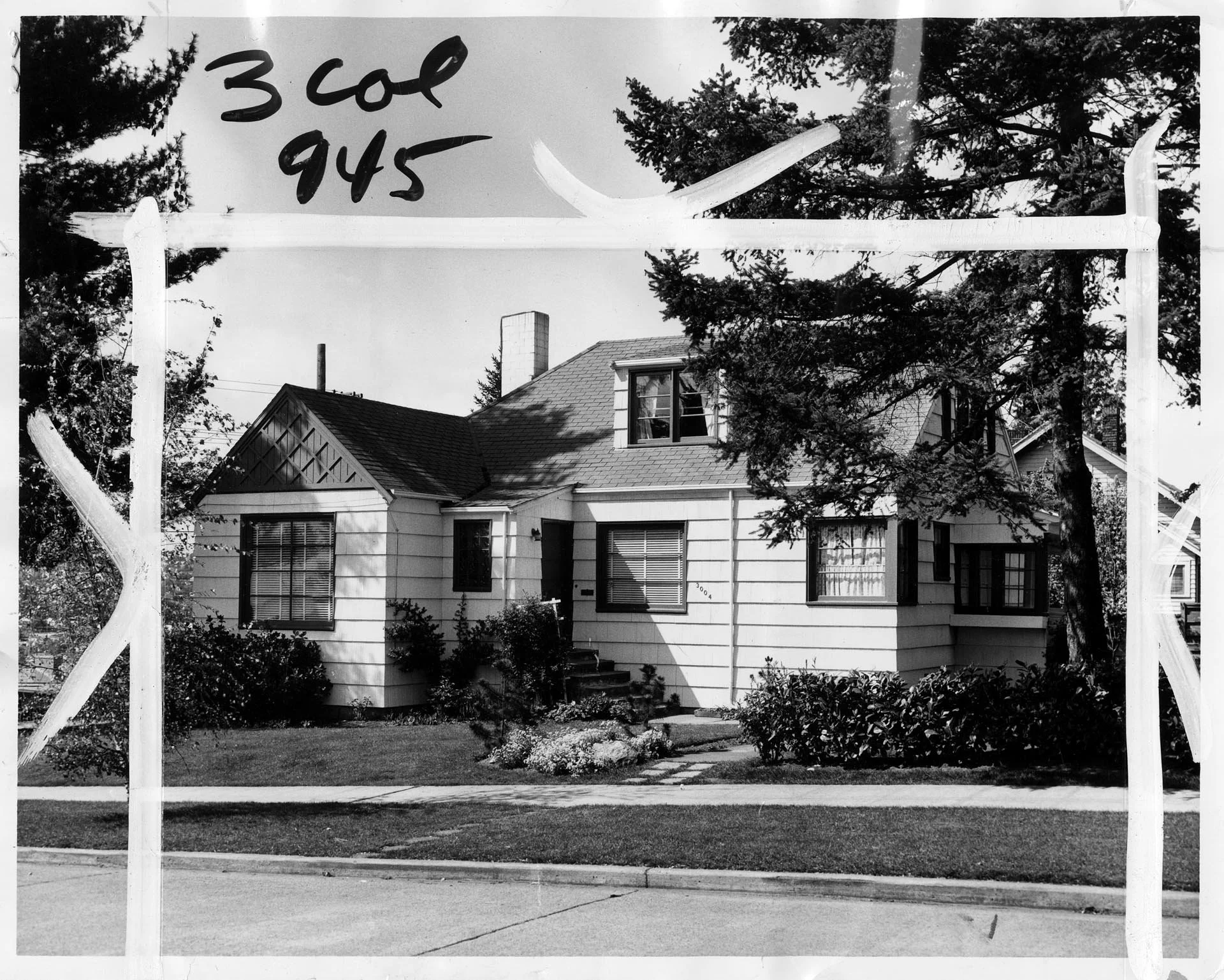
House at center of debate in Open Housing Campaign, Seattle, May 2, 1959
Seattle's African American population increased dramatically between 1940 and 1960, making the community the city's largest minority group. Like other minorities, African Americans experienced discrimination in many ways, including in housing. The enforcement of restrictive covenants in specific developments or subdivisions, realtors agreeing not to show houses to people of color, and red-lining, where banks denied credit to minorities, largely confined Black residents to the Central Area in Seattle.
The house picture here, at 3004 East 70th Street in Seattle's Ravenna neighborhood, set off a decade-long battle for fair and housing practices in the city, collectively referred to as the Seattle Open Housing Campaign. In 1959 Robert L. Jones, a U.S. Postal Service mail carrier, and his wife filed the first discrimination in housing compliant with the State Board Against Discrimination (WSBAD) after they attempted to buy this house from John J. O'Meara, a Coast Guard Commander, and his wife. The Jones' felt their offer was rejected because of the color of their skin, and WSBAD ruled in their favor, a decision overturned in 1961 by the Supreme Court of Washington.
The national civil rights movement, along with events such as the Jones/O’Meara case, inspired fair housing activists in Seattle. In late 1961, the Seattle branch of the NAACP proposed that the city pass an ordinance prohibiting discrimination in housing. Protests, sit-ins, and marches were held all over the city, but in 1964 the Open Housing Ordinance was defeated in the Seattle municipal elections, partially due to the Red Scare ideology sweeping the country proclaiming that to call for civil rights was un-American and even potentially reflected communist political tendencies. Despite the setback, public support continued grow for establishing fair and open housing in Seattle, aided by voluntary efforts such as the Fair Housing Listing Service and which brought together Black people wanting to move out of the Central District and white homeowners willing to sell to minorities. Operation Equality was a three-year program run by the Seattle Urban League to assist minorities in finding housing. The Seattle Real Estate Board issued a Statement of Principle in June 1965, stating that it was the policy of the Board that members should show all listings without discrimination. That same month Seattle Mayor Braman issued an Executive Order relating to fair practices, reaffirming the City's policy to protect the rights of all citizens and affording all persons equal treatment. Finally in April 1968, an open housing law passed in Seattle.
MOHAI, Seattle Post-Intelligencer Collection, 2000.107.136.07.02, photo by Philip H. Davis

Let’s work together
If you've made it this far, you probably care about doing this right. That's exactly the kind of buyer or seller I love working with.
I brought 20 years of business experience to real estate for one reason — I believed people deserved better guidance on one of the biggest financial decisions of their lives. The last four years have been about delivering on that, one client and one transaction at a time. My approach is built around education and empowerment, so you always know where you stand and what comes next, whether you're buying your first home or selling one you've loved for years.
If you're ready to approach your next move with this kind of clarity and intention, and you want someone who treats your transaction with genuine care and rigor, I'd love to be part of that process. You deserve to feel confident and informed at every step, not just at the end. Reach out and let's start the conversation.